
Living & Studying Guide: Bucharest
Romania's largest job market, its only metro system, and home to the country's largest universities.
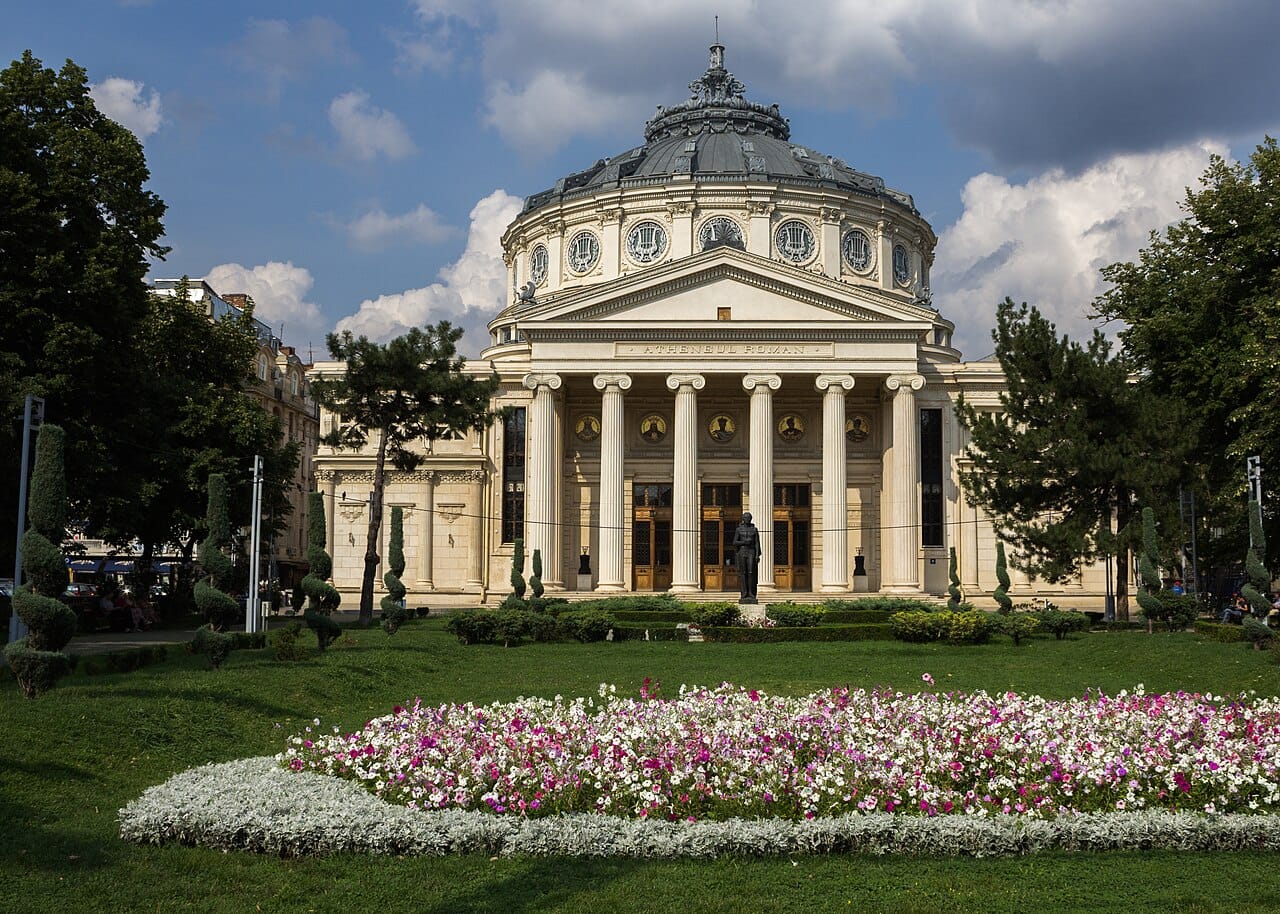
The Romanian Athenaeum (built 1888), one of Bucharest's architectural icons — Photo: Wikimedia Commons
Bucharest, Romania's capital and largest city, is the country's main hub for economic activity, higher education, and international job opportunities. Unlike other Romanian cities, Bucharest is the only one with a metro system, which alongside its extensive bus and tram network makes intra-city travel relatively easy.
That said, Bucharest is known for heavier traffic and air pollution than the other cities in this guide — worth weighing alongside its higher housing costs. Interestingly, as of February 2026 data, average apartment prices in parts of Cluj-Napoca have even overtaken Bucharest's.
1Cost of Housing & Living (Estimated)
- A 1-bedroom apartment in the city center: roughly 2,500–4,200 RON (~€500–840) per month.
- Outside the city center: roughly 1,600–3,150 RON (~€320–630) per month.
- Utilities (water/electricity/gas/waste): roughly 600–1,200 RON per month, depending on season and apartment size.
- Rent and cost-of-living figures change constantly and are estimated from self-reported (not official government) data; before making any decision, check current prices via local property-listing sites or your destination university.
2Transit & Universities
- Romania's only city with a metro system (Metrorex, 5 lines), plus buses, trams, and trolleybuses (STB).
- A regular monthly pass costs about 100 RON; students get a 50% discount (~50 RON), and some qualify for a free pass.
- Home to the University of Bucharest and Politehnica University of Bucharest, among Romania's largest and most prominent universities.
3Recommended Neighborhoods
- Universitate — the central student/academic hub.
- Cotroceni — popular with students and young professionals, near the Botanical Garden.
- Dorobanți/Floreasca — an upscale area, home to embassies and the expat community.
- Herăstrău — greener and quieter, near the city's large park.
4Safety & Practical Notes
- Bucharest is generally considered safe with normal urban precautions; Numbeo's safety index (a crowdsourced perception index, not official crime data) shows a relatively high score for Bucharest.
- As the capital and largest job market in the country, Bucharest has the highest concentration of multinational companies and job opportunities.
5Museums & Culture
- National Museum of Art of Romania (former Royal Palace, Revolution Square) — Romanian and European art, including Brâncuși and Rembrandt.
- National History Museum of Romania (Calea Victoriei) — home to Romania's Crown Jewels and the Pietroasele treasure.
- Dimitrie Gusti National Village Museum (inside King Michael I Park) — an open-air museum with 123 traditional houses and structures from across Romania.
- Grigore Antipa National Museum of Natural History — over 2 million specimens, including the world's only intact Deinotherium skeleton.
6Shopping & Malls
- AFI Cotroceni — Romania's largest mall (~90,000 m²), western Bucharest.
- Băneasa Shopping City — northern Bucharest, 280+ stores.
- Sun Plaza — southern Bucharest; Promenada Mall — northeast, a more upscale option.
- For everyday groceries: Kaufland, Lidl, Carrefour, Mega Image, Profi, Auchan, and Penny all operate widely across the city.
7Parks & Recreation
- Cișmigiu Gardens — the city center's oldest park (since 1847), with a lake; a common everyday gathering spot for residents.
- King Michael I Park (formerly Herăstrău) — roughly 187 hectares, the city's largest recreational green space, with boating.
- Obor Market — one of the city's oldest and largest traditional markets for fresh produce.
8Hospitals & Healthcare
- University Emergency Hospital of Bucharest (SUUB) and Floreasca Emergency Clinical Hospital — the two main public emergency hospitals.
- The private Regina Maria network (Ponderas Academic Hospital, Euroclinic) and the MedLife network are common private-care options for foreign residents.
9Airport, Train & Bus Stations
- Henri Coandă International Airport (OTP) — about 16.5 km north of the city in Otopeni; Romania's main international gateway. About 20–25 min to center by train, or 35–50 min by bus line 100.
- Gara de Nord (Bucharest North) — Romania's largest railway station, the hub connecting all major cities and several neighboring countries.
- For intercity/international coaches, Autogara Militari is the most-used terminal.
Frequently Asked Questions
Is Bucharest more expensive than other Romanian cities?
Generally yes, though Cluj-Napoca sometimes runs close to or even above Bucharest; Iași and Timișoara are typically cheaper.
Which neighborhood is best for newly arrived students?
Universitate and Cotroceni are typically the top picks for students due to their proximity to universities and public transit.
📚Related Guides & Next Steps
Recommended guides to complete your information and streamline your journey:
Cost of Living Calculator
Interactive Cost of Living Calculator in Romania. Estimate monthly living expenses including rent, groceries, utilities, transit, and leisure tailored to your lifestyle.
Renting & Buying Property
View details and requirements for this section
Admission Requirements
View details and requirements for this section
This guide is part of the "Cities of Romania" collection.
Want us to evaluate your profile?
Submit your basic information to find the right path for you.